Web
Web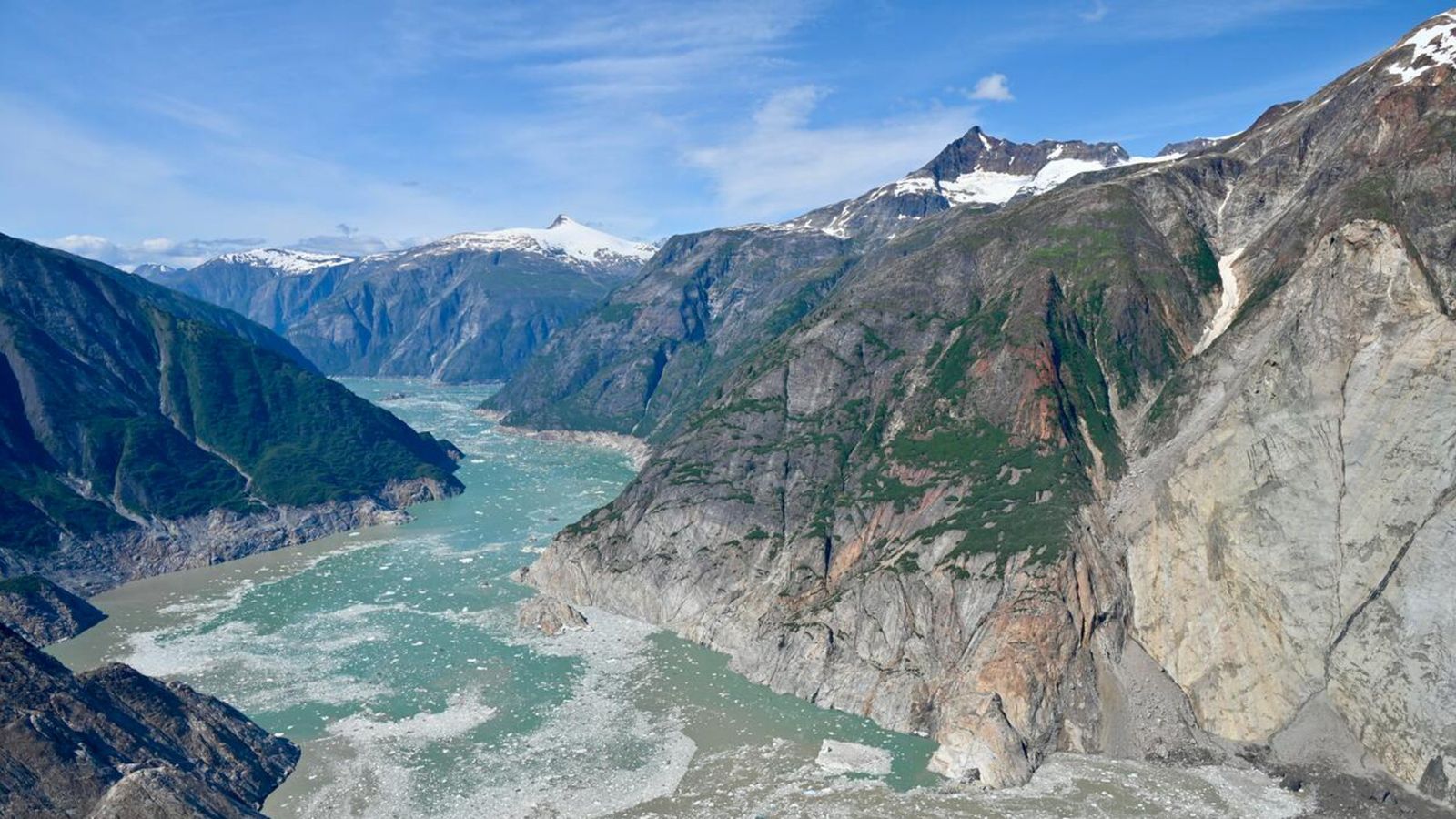
The wave hit tourist spot the Tracy Arm Fjord at 5.30am, so no boats were in the area. Next time “we may not be so lucky”, an expert warns.
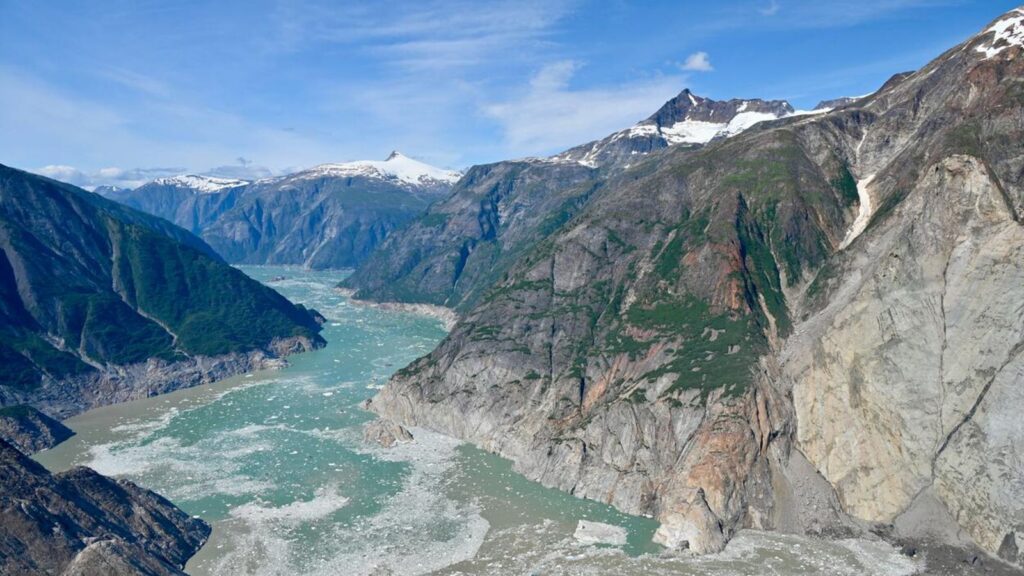
A tsunami at a popular tourist spot in Alaska was the second highest ever recorded and it was “unbelievably lucky” no one was hurt, researchers have said.
The wave at the Tracy Arm Fjord in the Tongass National Forest was triggered by a rock landslide which was driven by climate change.
Only the timing of the event, 5.30am on 10 August last year, meant no cruise ships or boats were in the area when the tsunami happened – but experts fear next time “we may not be so lucky”.
Scientists said the wave was up to 1,578ft (481m) tall, making it far bigger than The Shard in London and comfortably higher than New York City’s Empire State Building.
It was so powerful it violently stripped away vegetation and left behind scarring on the steep rock walls.
Climate change meant the glacier supporting the mountain had retreated amid warming temperatures, eventually leaving the rock unsupported and triggering a landslide.
Such huge waves – triggered by landslides, volcanic eruptions or meteors; rather than earthquakes – are sometimes termed as megatsunamis.
University of Calgary geomorphologist Dan Shugar, lead author of the study published in the journal Science, said: “The fact that the landslide occurred this early in the morning was unbelievably lucky.
“Next time – and there will be a next time – we may not be so lucky.
“The stripped vegetation is basically a very sharp line, below which there is only rock and sediment and some tree stumps, and above which is virgin forest, standing as it did on 9 August before the tsunami. Like two different worlds.”
There were no photographs or footage of the tsunami, so the scientists reconstructed the events using aerial photos taken after, alongside other data.
The researchers determined the tsunami’s height by measuring where the stripping of vegetation had occurred.